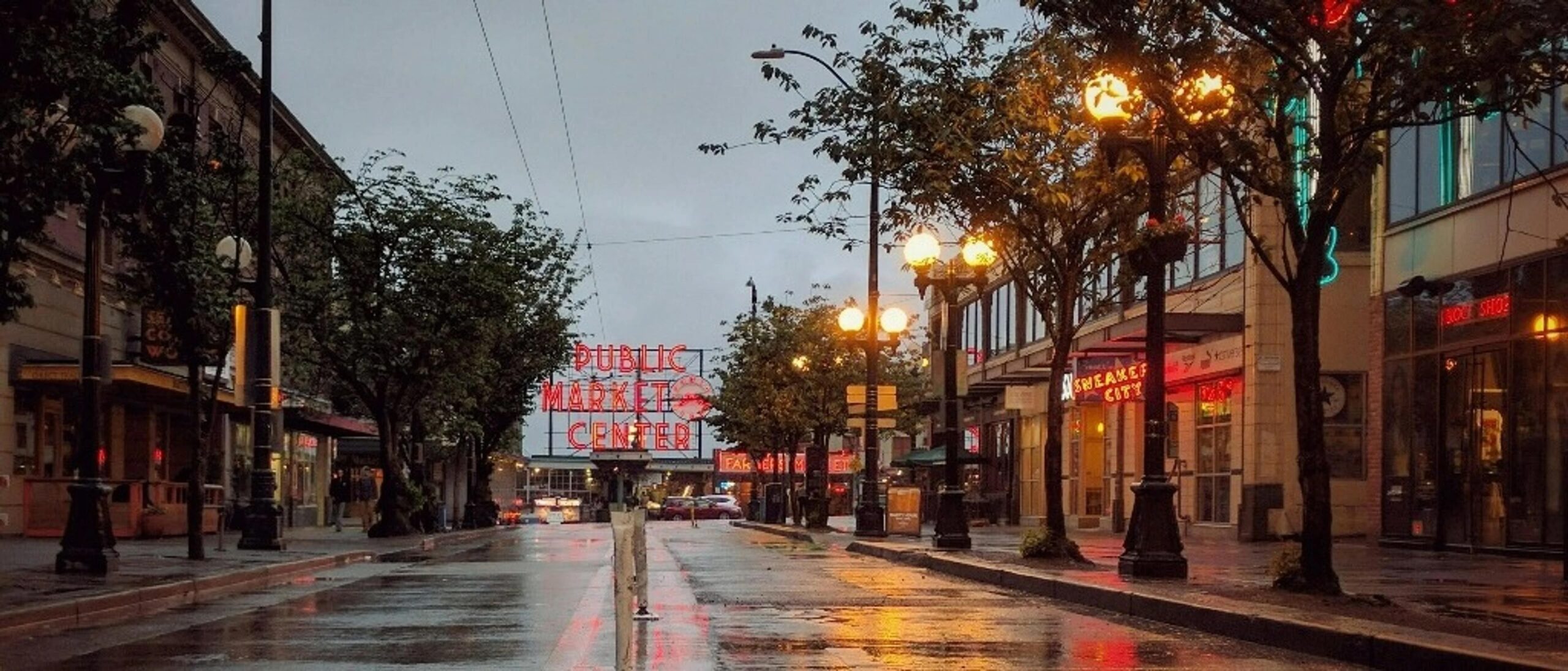

(And How to Know If You’ll Truly Love Living Here) Thinking about moving to Seattle? Here’s the honest truth about Seattle weather, winter darkness, summers, and what to expect year-round.
When people think about moving to Seattle, they think about rain.
Umbrellas. Puddles. Gray skies.
But the rain isn’t actually what surprises most people.
It’s the gray.
If you’re considering relocating to Seattle or anywhere in Washington State, I want you prepared — not nervous — just informed.
Because loving the Pacific Northwest starts with understanding it.
Seattle Weather: It’s Not Heavy Rain — It’s Persistent Gray
Seattle doesn’t typically get dramatic downpours.
It drizzles. It mists. It lingers.
From late fall through early spring, cloud cover can stretch for months. The rain is often light — but the overcast skies can feel constant.
Many people moving to Washington from sunnier states are surprised by how the gray affects them emotionally.
You may go days without direct sunshine.
Sometimes longer.
This isn’t weakness. It’s biology.
Which brings us to something important…
Winter Darkness in Seattle Is Real
In December, sunset happens around 4:20–4:30 PM.
By 5 PM, it feels like the middle of the night.
If you work traditional hours, you may leave for work in the dark and return home in the dark. For many newcomers, this is the biggest adjustment when relocating to Seattle.
Here’s what helps:
Vitamin D supplements
Intentional outdoor movement (even in drizzle)
Warm lighting inside your home
Community and structured routines
Seattle winters aren’t impossible — they just require intention.
And Then… Seattle Summer Arrives
This is the part no one fully prepares you for.
Seattle summers are breathtaking.
Blue skies. Crisp air. Snowcapped Mount Rainier in full view. Golden sunsets at 9:30 PM. Outdoor dining. Ferries crossing Puget Sound at dusk.
Many first-year transplants say:
“Wait… this is the same city?”
Yes. It is.
But here’s something else people don’t expect when moving to Seattle:
Most homes do not have air conditioning.
Historically mild summers meant AC wasn’t necessary. While recent years have been warmer, many homes still rely on portable units and strategic nighttime cooling.
It’s part of the Pacific Northwest rhythm.
Microclimates Across Seattle and Washington State
One of the most misunderstood parts of Seattle weather?
It varies dramatically by neighborhood.
The Eastside (Bellevue, Redmond) often gets more sun than Seattle proper
Waterfront neighborhoods may hold marine layer longer
Elevation changes affect rainfall
If natural light matters to you (and for many people it does), where you buy matters.
A lot.
Wildfire Smoke Season in Washington
Another surprise for those moving to Washington State is late-summer wildfire smoke.
Some years it’s minimal. Other years, air quality temporarily shifts due to fires in Eastern Washington or Canada.
Air purifiers are common in homes now, and most residents are familiar with checking air quality reports.
It’s part of living in the West.
If You’re Moving to Seattle, Do This First
Visit in February.
Not July.
Not August.
February.
Drive your potential commute in the rain.
Walk the neighborhood in gray light.
Sit in a local coffee shop at 3 PM when it’s already dim outside.
If you can find beauty in that version of Seattle, you will love living here long term.
Because the magic isn’t only in the sunshine.
It lives in misty mornings.
Moss-covered trees.
Quiet ferry crossings.
Mountains revealing themselves slowly after days of clouds.
Seattle doesn’t shout its beauty.
It rewards those who pay attention.
The Emotional Side of Relocating to Seattle
After years of helping families relocate to the Seattle area, here’s what I’ve observed:
The people who thrive here don’t fight the weather.
They adapt to it.
They invest in the right coat.
They plan a winter getaway somewhere sunny.
They lean into cozy seasons.
They build community intentionally.
Seattle isn’t for everyone — and that’s okay.
But if you love water, mountains, dramatic seasons, and a quieter kind of beauty…
It’s hard to leave once it gets into your bones.
Thinking About Moving to Seattle?
Relocating isn’t just about square footage and price per foot.
It’s about lifestyle.
It’s about how a place feels in February — not just how it photographs in July.
If you’re considering moving to Seattle or anywhere in Washington State, I’d be honored to help you evaluate neighborhoods, commute strategy, natural light exposure, and long-term fit.
There’s a difference between buying a house…
…and landing well.
Let’s make sure you do both. 💚